

Imagine receiving a phone call from a loved one, their voice filled with urgency, pleading for help in a crisis. You rush to their aid, only to discover it was a smartly crafted audio deepfake. How did you feel when you arrived? You might feel relief once realizing your loved one is safe. But did you consider the intense anxiety you experienced before arriving? Perhaps the fear of a heart attack when hearing the scream on the phone call.
Now, consider if such a call was received by a dispatcher at an emergency center. In this scenario, the dispatcher would likely respond immediately by relaying the information to officers and mobilizing resources. Such incident not only consumes valuable time from all agencies involved in this incident, but also diverts attention away from genuine emergencies, potentially putting real lives at risk. If a considerable amount of fake calls received simultaneously, they could disrupt the entire emergency response system and paralyze it completely.
What Are Audio Deepfakes?
Deepfake technology refers to a sophisticated method of creating or altering content of a text, audio, images, or video. The term deepfake combines deep, which refers to deep learning techniques, with the word fake, indicating that the content is not authentic but is artificially created or manipulated to appear genuine, even if it is entirely fabricated. Audio deepfakes, in particular, use technology to create or modify audio so that it sounds like someone is saying something they didn’t actually say. They fall into two main types: Text-To-Speech, which converts a text into spoken words, and Voice Conversion, which changes one person’s voice to sound like another’s while maintaining the original speech’s emotional tones.
The Fight Against Audio Deepfakes
As deepfake technology continues to advance, audio deepfake techniques become increasingly sophisticated and harder to detect, indicating that traditional detection methods are no longer reliable. To effectively detect and combat audio deepfakes, it’s essential to understand how they are created and what kind of technologies are used. Research activity in this field is advancing rapidly, and researchers are exploring a variety of innovative approaches. They are developing robust machine learning models designed to analyze audio features and detect unusual patterns. However, for these models to be effective, they require comprehensive datasets to evaluate and test them. To support this need, several open-access dataset platforms have been developed by researchers and organizations. This dataset consists of genuine audio and fake audio generated using different machine learning techniques. These datasets serve as a foundation for training and evaluating detection algorithms, helping researchers create models that perform reliably across different types of manipulated audio.
Why It Matters
By understanding the risks associated with audio deepfakes, we can be better prepared. Scammers and fraudsters consistently use cutting-edge technology to manipulate their victims. It’s worth mentioning that this kind of threat is not limited to a fake phone call; it also includes spoofing techniques that can be used to gain unauthorized access to sensitive information, such as bank accounts and home security systems. With the relentless progress in AI technology, sophisticated deepfakes will become readily available to anyone with malicious intent. Raising awareness about this issue is critical for everyone, from law enforcement and emergency services to the general public and individuals. Deepfake attack protection should be an integral part in the deployment of any critical communication system to protect the public and ensure safety.
Dr. Salma Ait Farès
Technical Research Chair
Keep your mission-critical communication lines open and secure with InterTalk!
Contact InterTalk today to book a needs assessment to discuss your communication needs with our expert team.
Products
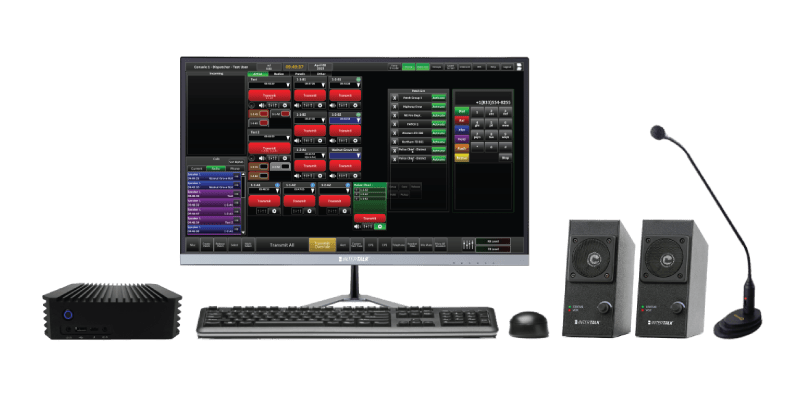
InterTalk Dispatch Console System
Powerful Radio Dispatch Solutions
Exact-fit dispatch solutions that direct all aspects of your control, communications, and intelligence infrastructure at a secure, single point of contact.

InterTalk Enlite™
Next Generation Dispatch
Encrypted, secure & reliable, flexible dispatch solution with on-demand scalability providing operational continuity and mobility. Cloud or on-premises infrastructure.
Recent News
Enlite Feature Update | Q2 2026
It's been a big quarter for Enlite. From April through June 2026, our development team shipped a wave of new capabilities focused on smarter call management, the foundation for AI-powered transcription, and meaningful improvements to console reliability and dispatcher...
Beyond Words: Why Plain Text Is Not the Whole Story in Public Safety
It is 2:47 in the morning. A call comes in. A voice says three words: "Please send help." Then the line goes quiet. The Dispatcher's Ear An experienced dispatcher does not hear only the words. They hear the breathing. They notice the hesitation. They recognize that...
Command and Control: How Radio Dispatch Consoles Elevate Your Security Communications
In the world of professional security, information moves fast, and so do threats. Whether you're overseeing a sprawling fulfillment center, coordinating response across a hospital campus, or managing access at a university with tens of thousands of students, the...


